The quickest way to spot a fake Louis Vuitton bag is to look for details that disagree with each other. The shape, materials, stitching, stamps, and hardware should make sense for the same model and production period. One convincing detail cannot settle the rest.
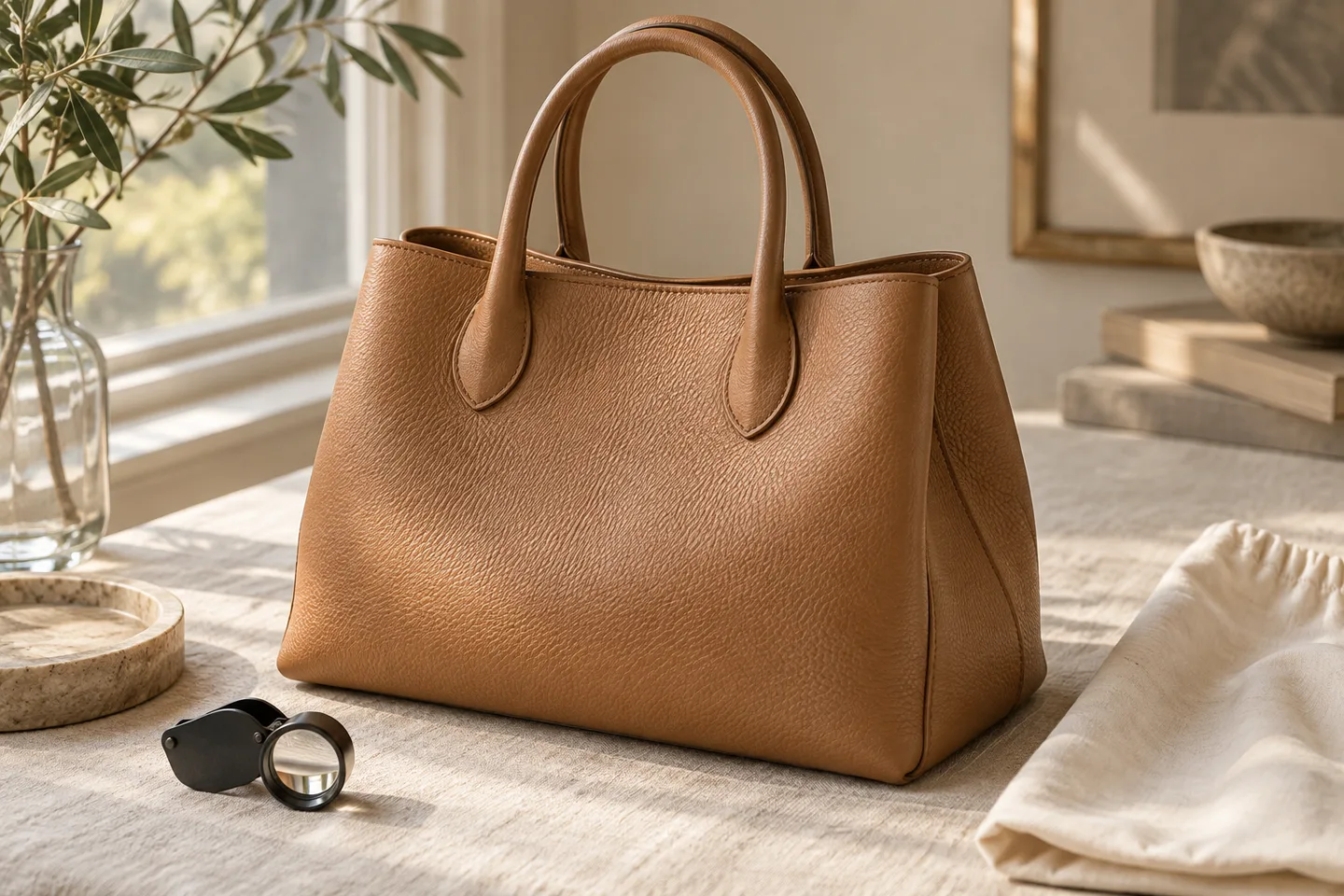
I would use the checks below to decide whether to ask for better photos, arrange an independent assessment, or walk away. They can reveal warning signs in a listing. They cannot authenticate every Louis Vuitton bag, especially from blurry photos.
Fake Louis Vuitton vs real: the quick comparison
| Look at | Reason to pause | Keep in mind |
|---|---|---|
| Model and materials | Shape, pockets, or trim differ from the claimed version | Designs change over time |
| Stitching and stamps | Uneven construction or poorly formed letters | Wear and repairs can affect appearance |
| Hardware and lining | Parts do not match the model's specifications | Finishes and interiors vary |
| Date code | The code conflicts with the claimed age | A plausible code is not proof |
| Seller's evidence | Missing detail photos or pressure to pay | A dust bag or receipt is not authentication |
1. Identify the exact Louis Vuitton bag
Start with the model, size, material, and approximate age. A Speedy 30 is not the same item as a Speedy Bandoulière 30. Monogram canvas and Monogram Empreinte leather need different comparisons. Search for the reference number when the seller provides one.
The current Speedy Bandoulière 30, M46980, has coated canvas, natural cowhide trim, textile lining, a double zip, and a removable strap. Those details provide a starting reference for that version. A vintage Louis Vuitton bag should be compared with records from its own era, not judged only against today's product photos.
Ask about repairs, replaced handles, or a new lining. A changed part deserves explanation; it does not automatically make the whole bag fake. Save the listing photos and the seller's description before purchase.
2. Examine the canvas, leather, and monogram
On classic Monogram canvas bags, the patterned body is coated canvas, not leather. The leather trim is a separate material. Look for the right print, proportions, and placement for the model. Compare both sides, the base, and the seams in clear daylight photos.
Natural untreated cowhide can darken with use. Fresh leather handles may look pale, while older handles develop a deeper patina. Color alone is a weak test: lighting, storage, cleaning, and replacement parts can change what you see. Avoid water or scratch tests that could damage the bag.
Do not reject a Louis Vuitton bag just because a logo is cut off or upside down. Some classic canvas Speedy designs use a continuous panel, leaving the monogram inverted on one side. Other shapes have different construction. Nor does a perfectly aligned print prove that a bag is authentic; counterfeiters can copy it.
3. Inspect the stitching and handles
Follow the stitching around the handles, tabs, pockets, and seams. Look for controlled spacing and a tidy finish. Repeated skipped stitches, poorly joined panels, or loose trim warrant closer inspection, particularly on an item described as new.
Mustard yellow thread is familiar on classic Monogram Speedy examples, but it is not a rule for all LV bags. Compare the thread color and stitch pattern with the same material and era. Avoid a universal stitch-count shortcut: construction can change when a model is redesigned.
A single loose thread on a used bag is not a verdict. Consider the overall quality, where the wear appears, and whether a repair explains it. If a seller calls a visible mismatch normal, request a clear reference showing the same detail.
4. Read the heat stamp carefully
Ask for a sharp, straight-on photo of the heat stamp. Inspect the font, spacing, depth, and edges of the letters in LOUIS VUITTON PARIS. Blurred or irregular lettering is a reason to investigate, though a poor photo can hide a good stamp.
Common reference points include rounded O shapes, a short leg on the L, and closely spaced Ts. These are comparison clues, not a pass-or-fail formula for every product. An authentic Louis Vuitton stamp can look worn, and a fake Louis Vuitton stamp can look convincing.
France is not the only legitimate manufacturing country. The official Speedy listing includes France, Spain, Italy, and the USA. Some versions use a separate country label. Compare all available stamps with the expected layout for that bag.
5. Compare the hardware and inside details
Check zippers, rings, clasps, and engravings. When handling a bag, observe whether the closures work smoothly and the handles feel securely attached. In a listing, request close-up photos and a short video of the zippers opening and closing.
A heavy lock cannot authenticate a bag, and gold-color hardware does not mean every metal part is solid brass. The correct finish, shape, and markings depend on the model. Wear on used hardware also needs context.
For a concrete comparison, the current Neverfull MM Monogram, M46987, has striped textile lining, a hook closure, side laces, an inside zipped pocket, and a removable zipped pouch. Its top does not close like the Speedy's double zip. Check the exact version before treating an interior difference as evidence of a fake Louis Vuitton bag.
6. Put the date code in context
A Louis Vuitton date code indicates manufacturing details; it is not a unique serial number or an authenticity certificate. A code that fits the expected format can still appear on a counterfeit bag. Compare it with the model's history and any country stamp.
For the familiar four-number formats, 1990 through 2006 codes use the first and third digits for the month and the second and fourth for the year. From 2007, the first and third digits indicate the week instead. Earlier formats differ, so do not apply one decoder to every vintage item.
Missing codes also need context. Lollipuff documented the move toward embedded microchips in March 2021, explaining that many newer handbags would no longer carry a visible date code. Older stamps can fade. Neither a missing code nor a phone detecting a chip settles whether a Louis Vuitton bag is real.
7. Look beyond the dust bag and packaging
A box, dust bag, shopping bag, or receipt is supporting material. None proves that the handbag beside it is authentic. Equally, a genuine secondhand item may have lost its original packaging.
Before you shop, read the seller's return terms and authenticity guarantee. Find out what evidence they require if you dispute the item. Use a payment method whose buyer protection covers the purchase, and keep the transaction within the marketplace's rules.
An unusually low price is a reason for questions, not proof of a fake. Condition and repairs affect resale value. Walk away if the seller refuses useful photos, gives conflicting answers, or pushes you to pay before you can examine the details.
Photos to request before you buy
Ask for unfiltered photos of the front, back, base, both sides, full interior, handles, and corners. Add close-ups of the heat stamp, any date code, stitching, zipper pulls, and hardware engravings. Request a new angle if glare hides the finish or the letters are blurry.
A professional authenticator may need additional views or an in-person inspection. Choose a service that explains its requirements, experience with the brand, and what happens if it cannot reach a conclusion. A quick check should help you decide the next step, not talk you into ignoring uncertainty.
What makes a real Louis Vuitton bag worth buying?
Authenticity is only the first decision. Check the condition, repairs, size, and whether the bag suits your routine. Think about the clothes you already wear, from everyday loafers to relaxed linen pants. Even an authentic bag is a poor purchase if it does not work for your day.
My rule: when the model, materials, stamps, stitching, and seller's evidence agree, the bag is worth a closer look. When they do not, pause. Knowing when to ask for help is part of learning how to spot a fake Louis Vuitton bag.